Gross sales can rise while the money left after costs falls. FlipFinds helps you keep purchase costs and sale outcomes with the inventory behind them, then review the results in its profit and analytics screens.
Separate an estimate from a recorded result
Before buying, estimate the sale price and selling costs. After selling, record the actual outcome instead of leaving the original estimate unchanged. A buyer discount, shipping label or overlooked fee can change the result substantially.
For a hypothetical $50 sale, $15 purchase, $5 seller fee and $8 shipping leave $22 before other expenses. That calculation is useful only when the costs describe what actually happened.
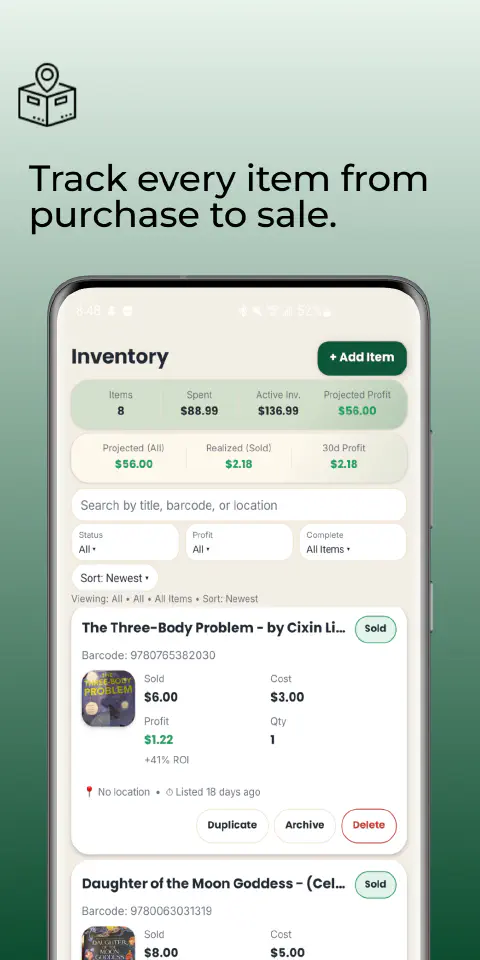
Read ROI and margin with the right denominator
ROI compares profit with cash invested. Margin compares profit with revenue. They answer different questions and should not be substituted for each other. A free item with no other investment has no meaningful ROI percentage; an incomplete cost history cannot establish a reliable business trend.
Use analytics to review your recorded activity. Empty history, missing costs and partial periods limit what you can conclude. No screen can account for expenses that were never entered.
Keep a short reconciliation routine
Compare a few sold item records with your marketplace statements. Correct missing fees and shipping, then review the result again. The public calculator is useful for planning; your actual records are the basis for evaluating past performance.
Compare ROI with margin before choosing your own planning target. FlipFinds does not guarantee profit or automatically import every marketplace expense.